

Diagnose my dull spots
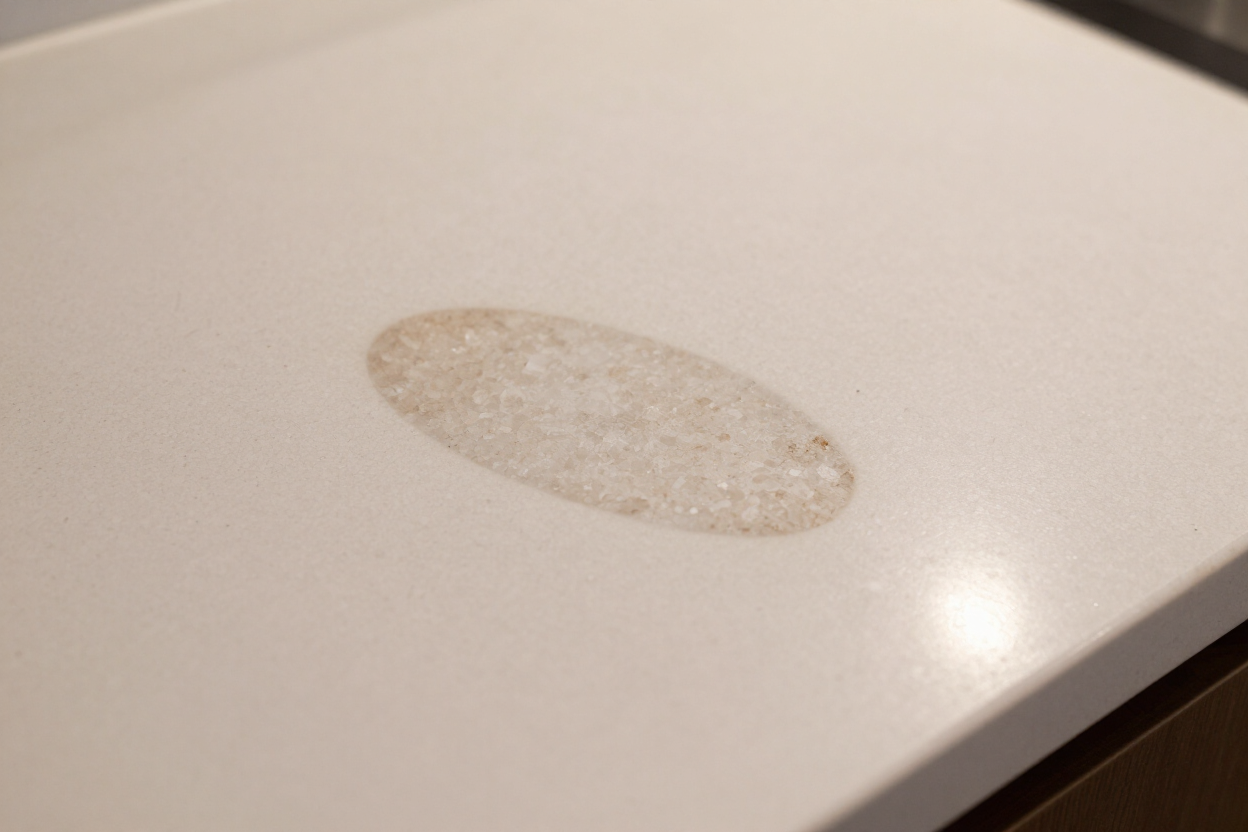
A ring where a glass sat. A cloudy patch that won't wipe off.
That isn't a stain and it isn't dirt. It's an etch mark, and it's the most misunderstood damage in stone. Here's what it is, what caused it, and why the bottle from the store won't fix it.
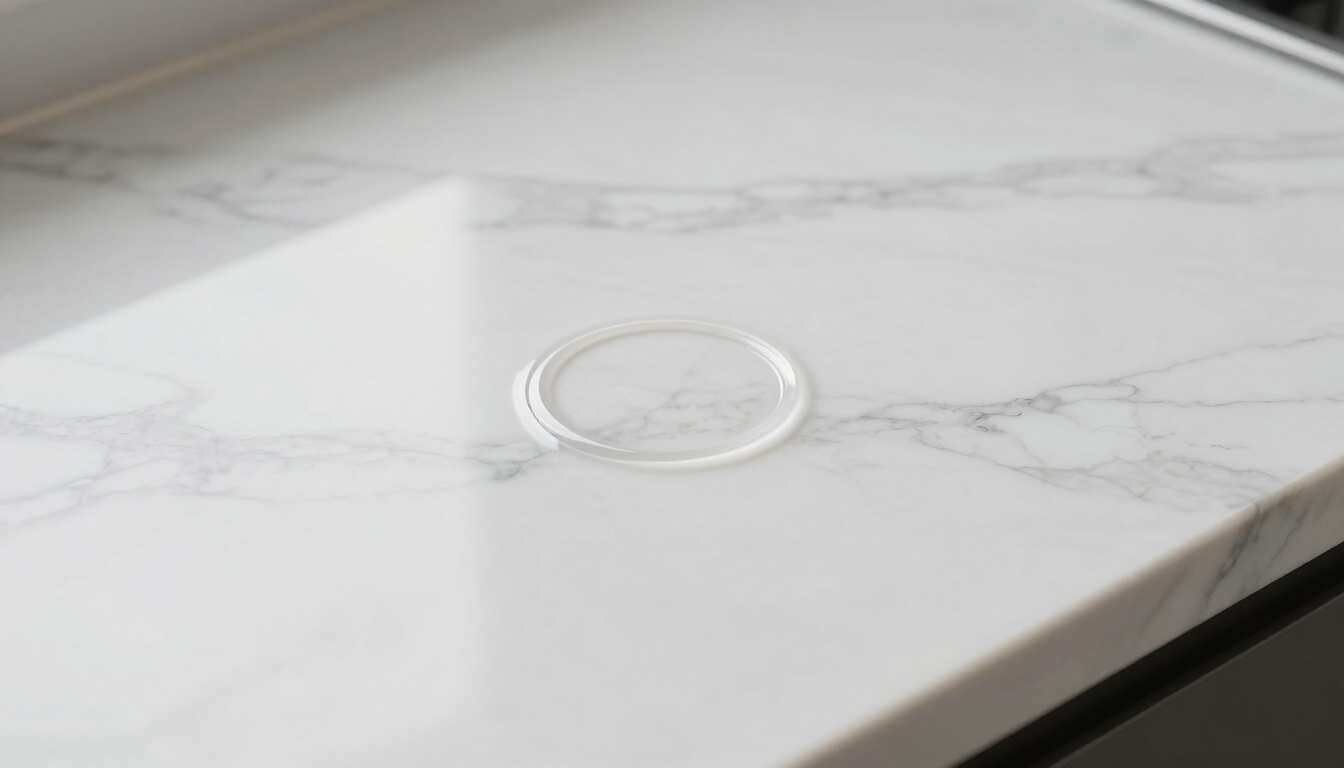
What an etch actually is
Marble, and some stone sold as quartzite, is made of calcium. Acid reacts with calcium. When lemon, wine, vinegar, tomato, soda, or an acidic cleaner touches the surface, it doesn't leave something behind. It takes something away. The polish in that spot is gone, and what's left is rougher, so it looks dull, lighter, or cloudy next to the stone around it.
That's why it has no color, why it won't wipe off, and why sealer never stopped it. Sealer slows down what soaks in. An etch happens on the surface, on contact.
Did you know? Sealed marble etches exactly like unsealed marble. Sealer slows down what soaks in. An etch happens on the surface, on contact, and sealer has nothing to do with it.
Which stone, which damage
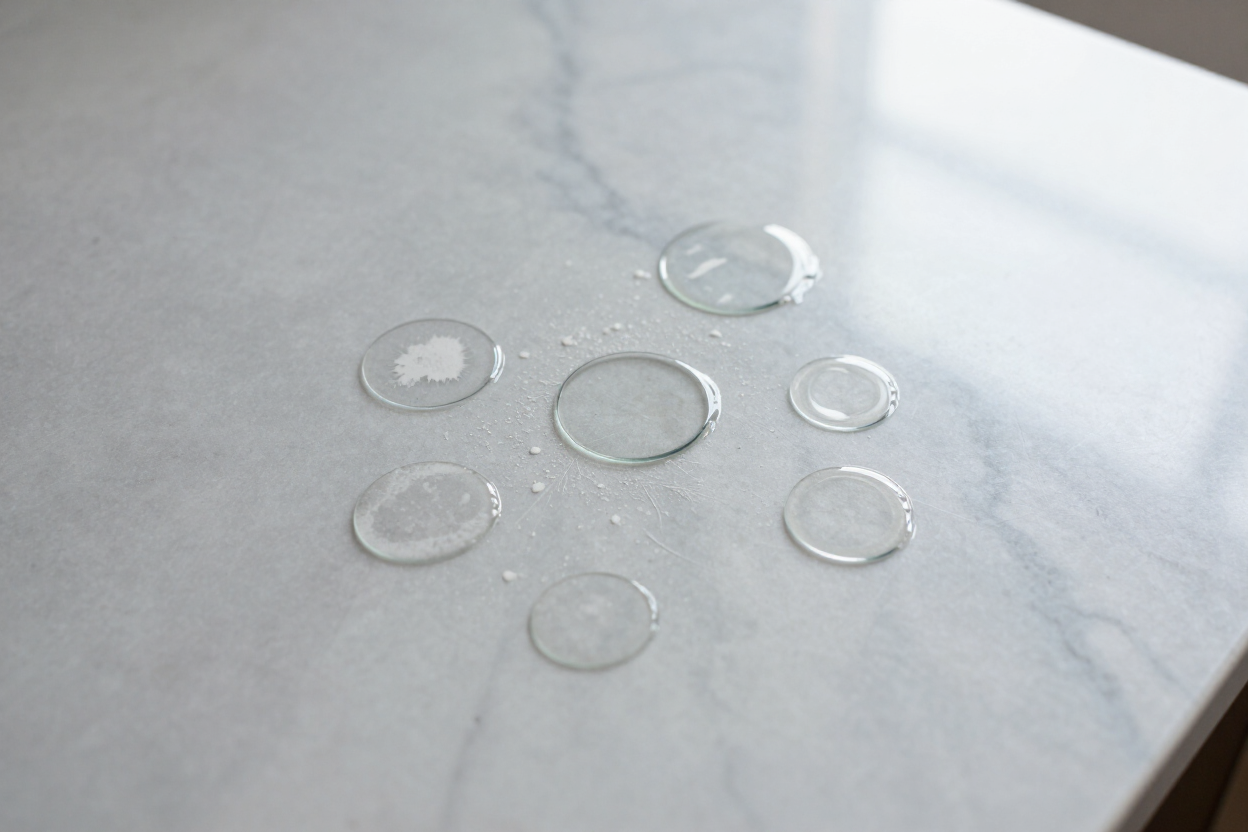
Marble
Rings, splash marks, a dull patch by the sink or the coffee maker.
Marble etches on contact, no matter how careful you are. A polished finish shows every mark. A honed finish hides light ones but still etches. Light etches come out with a short re-polish of that spot. Deep or widespread etching means the whole top gets re-honed in steps and re-polished so it all matches.
● Pro: all etching. There is no homeowner fix for an etch.
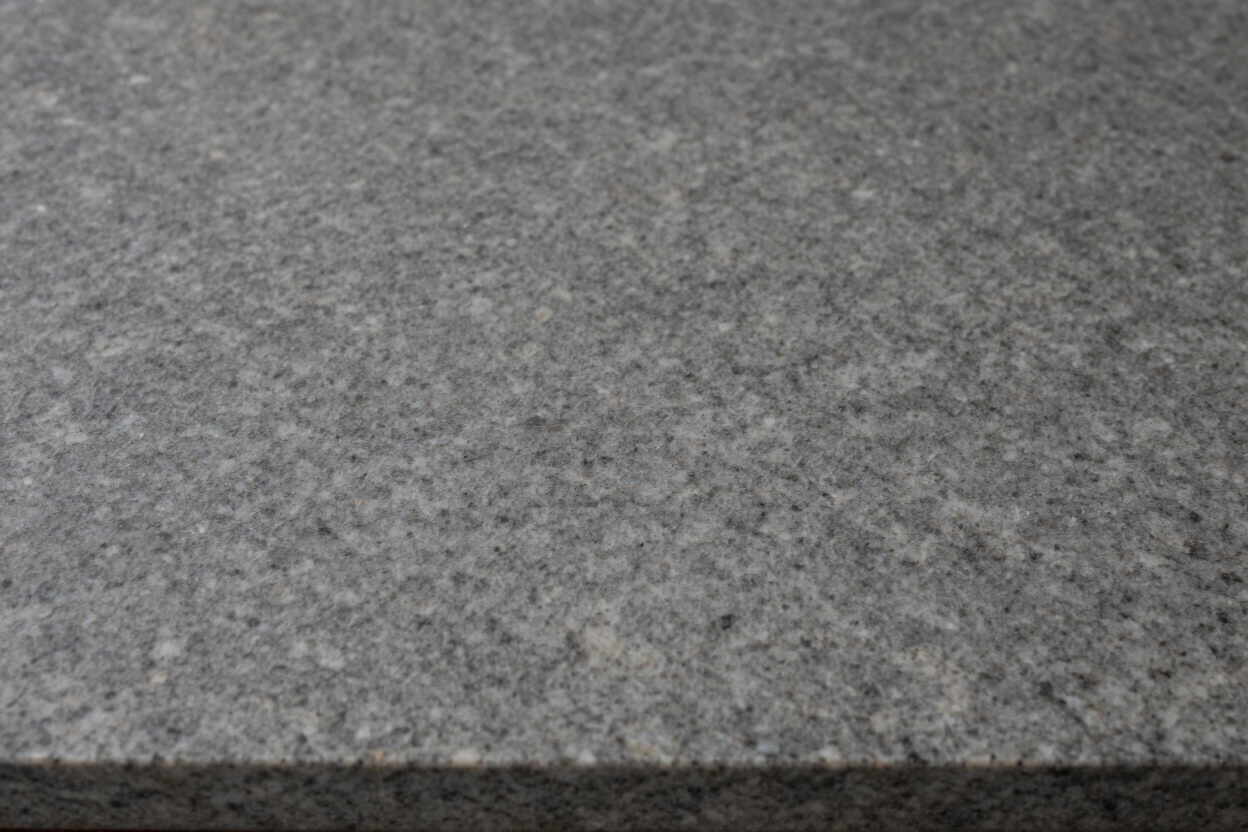
Granite
A hazy patch, a dull streak, an area that lost its shine.
Granite doesn't etch from kitchen acids. Dull spots on granite usually come from harsh or abrasive cleaners, a scrub pad, wear at the sink and the stove, or a topcoat product that built up and clouded. Some of it is buildup that strips off. Some of it is the finish itself, worn down, and that gets re-polished.
● Homeowner: buildup from a store polish or topcoat, stripped with a stone-safe cleaner
● Pro: the finish itself is dulled or scratched
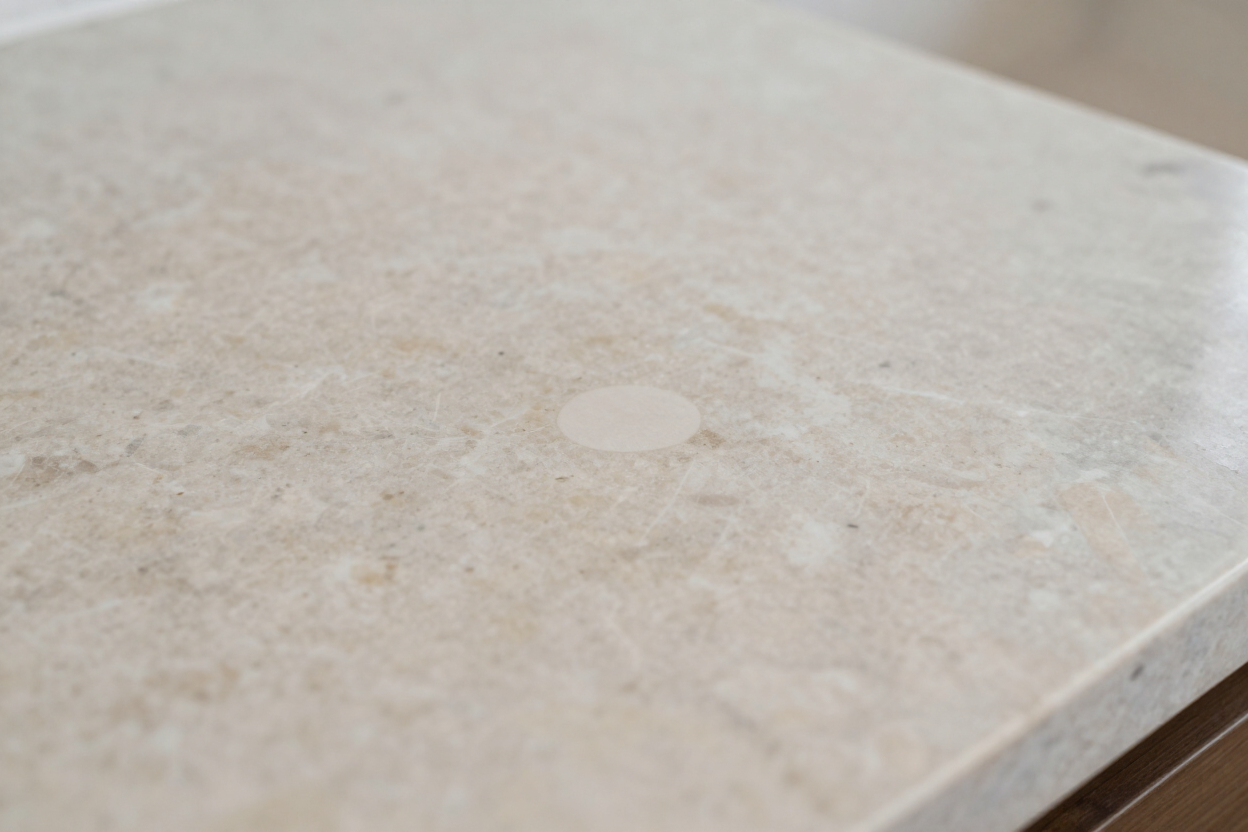
Quartzite
Etch-like rings on a stone you were told wouldn't etch.
True quartzite doesn't etch. A lot of what's sold as quartzite isn't true quartzite; it's a marble-family stone that looks the part and etches like marble. If your quartzite has dull rings, that's the most likely reason. We test before we touch it, and the repair is the same as marble.
● Pro: any etching on quartzite, plus a stone test before work starts
Quartz (engineered)
A dull or discolored patch, often near the stove or where something hot sat.
Quartz doesn't etch. Dull spots in quartz are damage to the resin, from heat, a harsh chemical, or an abrasive. Some of it polishes out. Some is permanent. We'll tell you which before any work begins.
● Pro: all resin damage
Did you know? A lot of stone sold as quartzite isn't. It's a marble-family stone that looks the part and etches like marble. If your "quartzite" has rings, that's almost always why.
What have you already tried?
Same rule as stains: this matters more than the mark.
- Nothing yet. Good. Don't put anything on it.
- A store-bought stone polish. Those are waxes and toppers. They sit on top of the etch and shine for a while, then wear off or cloud, and the mark is still underneath. That's why it "came back."
- More sealer. Sealer goes in the pores. An etch is on the surface. It can't touch it.
- A polishing powder or a "marble etch remover" kit. Those are fine abrasives. In the wrong hands they leave a patch that's a different sheen from the rest of the top, which is harder to blend than the original etch. If you've done this, send a photo. It's still fixable.
- Vinegar, lemon, or an acidic cleaner to "clean it off." That made it bigger. Stop here.
Did you know? Etches don't spread on their own. Living with one is a fair choice. What changes over time is the fix: one ring is a spot job, a top covered in them is the whole surface.
How an etch is actually fixed
Mechanically. The surface is re-cut with abrasives in steps, from coarser to finer, until the damaged layer is gone and the finish is rebuilt to match the rest of the top. A single light etch is a small job on one spot. A top covered in rings, or one that's already been worked on with the wrong product, is the whole surface re-honed and re-polished. Nothing is applied. Nothing wears off.
Send a photo. See it gone.
Your own counter, with the rings gone, back in your inbox. Plus what caused them and what we'd do. No visit, no pressure.