

Diagnose my stain
Something soaked in and won't come out.
Most stains in natural stone can be drawn back out. Some can't, and a few of the things people try turn a stain into permanent damage. Here's how to tell what you're looking at and what to do about it.
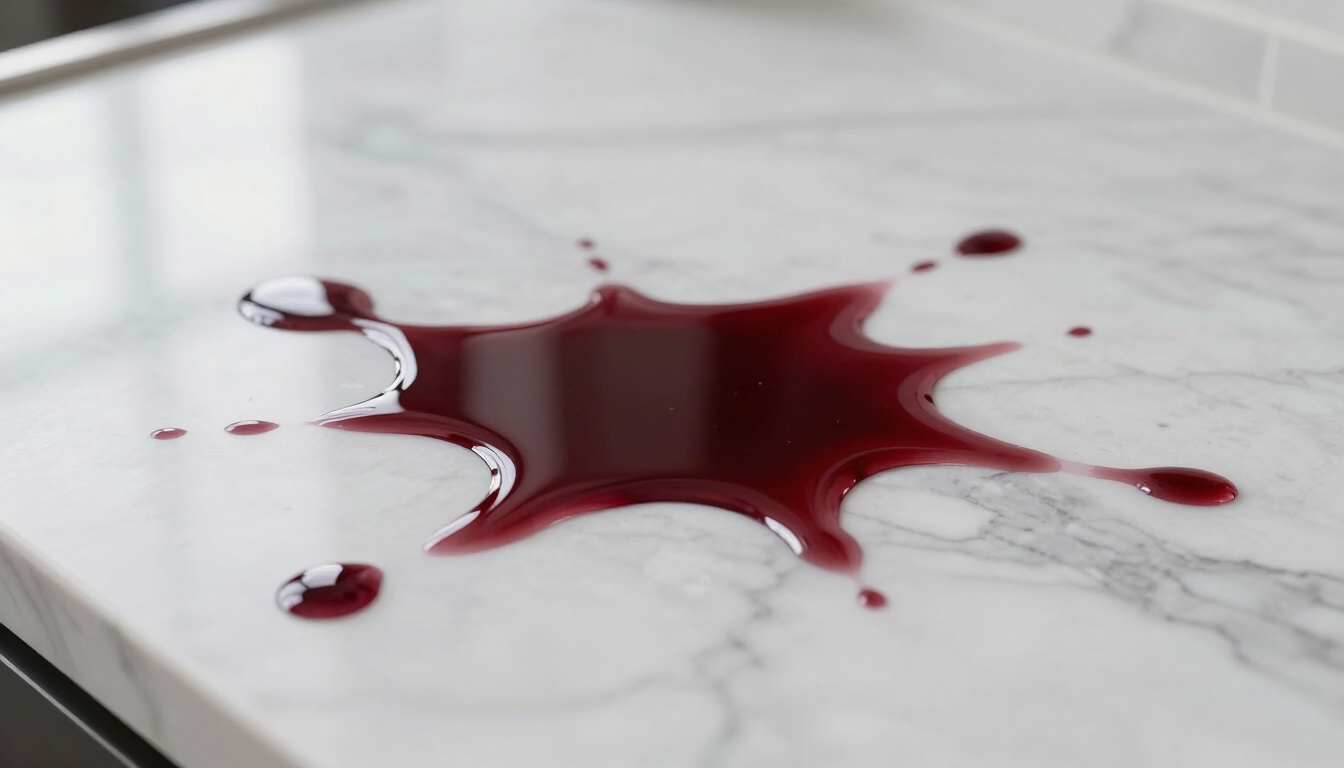
First: is it actually a stain?
A stain has color. Coffee brown, wine red, oil gray, rust orange. It sits in the stone, and it looks darker than the stone around it.
A dull spot with no color, especially a ring where a glass sat, isn't a stain. It's an etch, where something acidic ate into the polish. No cleaner fixes an etch. That's a different page.
Did you know? Sealer doesn't make stone stain-proof. It buys you time. A spill that's blotted in minutes on sealed stone usually never becomes a stain. The same spill left overnight will.
Did you know? Sealed marble etches exactly like unsealed marble. Sealer slows down what soaks in. An etch happens on the surface, on contact, and sealer has nothing to do with it.
Did you know? A lot of stone sold as quartzite isn't. It's a marble-family stone that looks the part and etches like marble. If your "quartzite" has rings, that's almost always why.
What kind of stain is it?
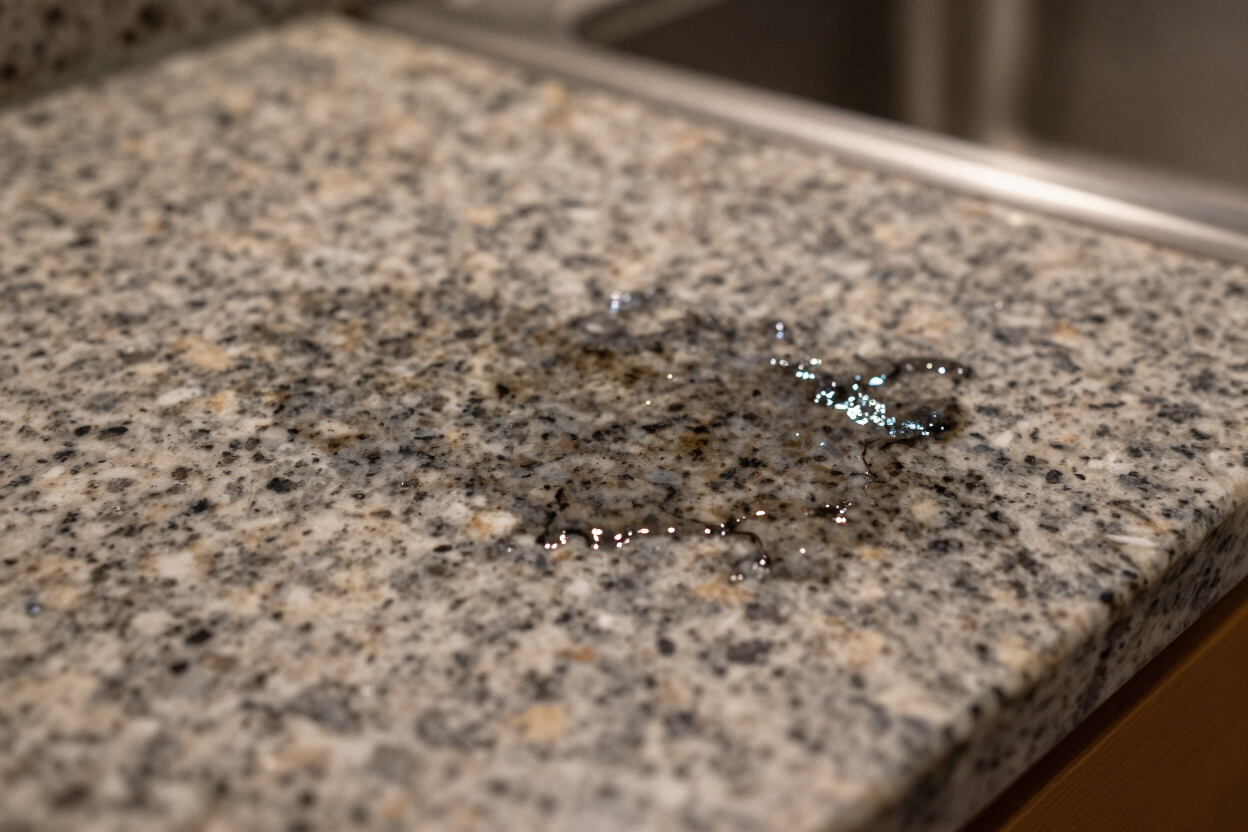
Oil and grease
Cooking oil, butter, lotion, cosmetics. Shows as a dark patch that doesn't dry out.
The most common stain in granite and the one sealer exists to prevent. It wicks into the pores and stays. Fresh oil that's blotted right away often never becomes a stain. Once it's in, it has to be drawn out, and that's a job for us.
● Homeowner: blot it immediately, mild dish soap, nothing else
● Pro: anything that's still there after that
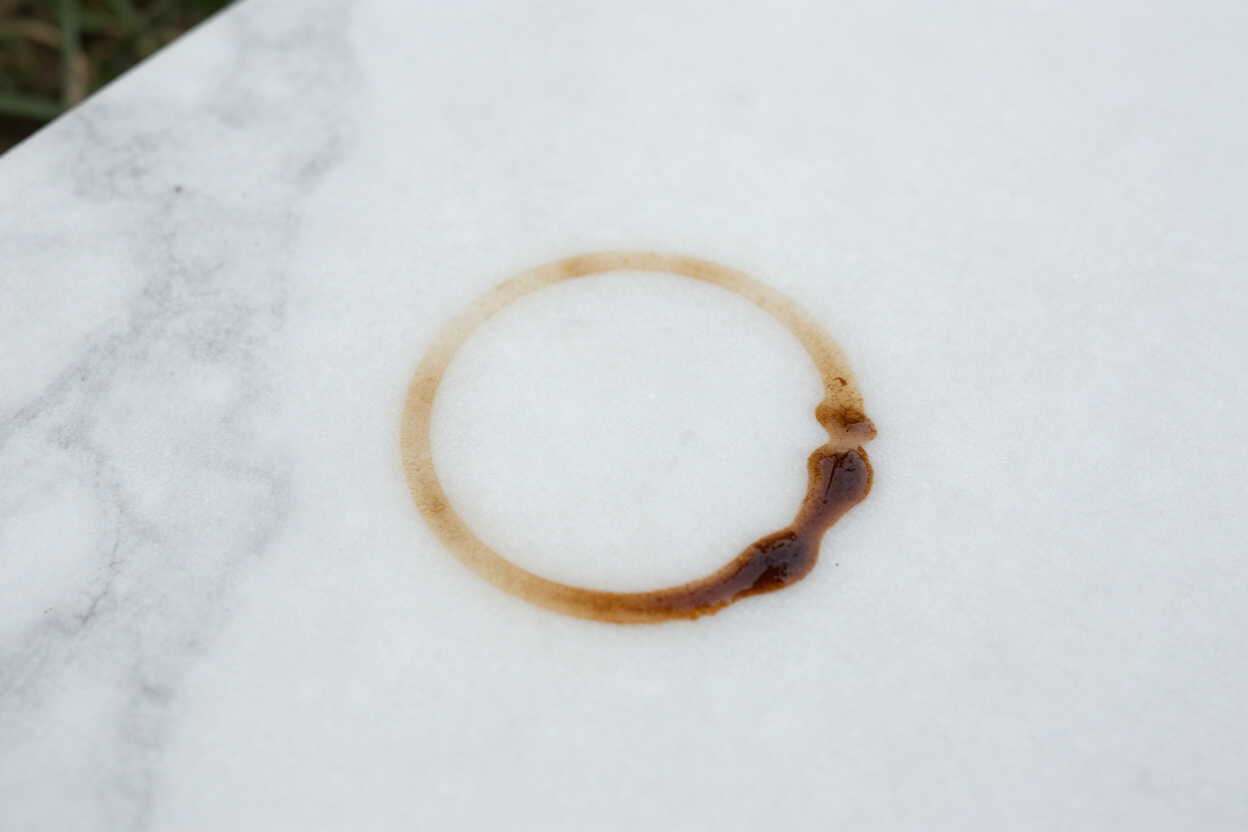
Coffee, wine, tea, juice, food
Organic color. Pink, brown, or tan patch. On marble it often comes with an etch underneath, because these are acidic too.
Organic color comes out of granite and quartzite reliably. Dark stone needs the right chemistry or it lightens around the stain. On marble, the color is only half the problem: these are acidic, so once the color is out, the dull mark from the acid is still there and that gets re-polished.
● Homeowner: blot, rinse with water, mild dish soap
● Pro: any color that's still there, anything on marble
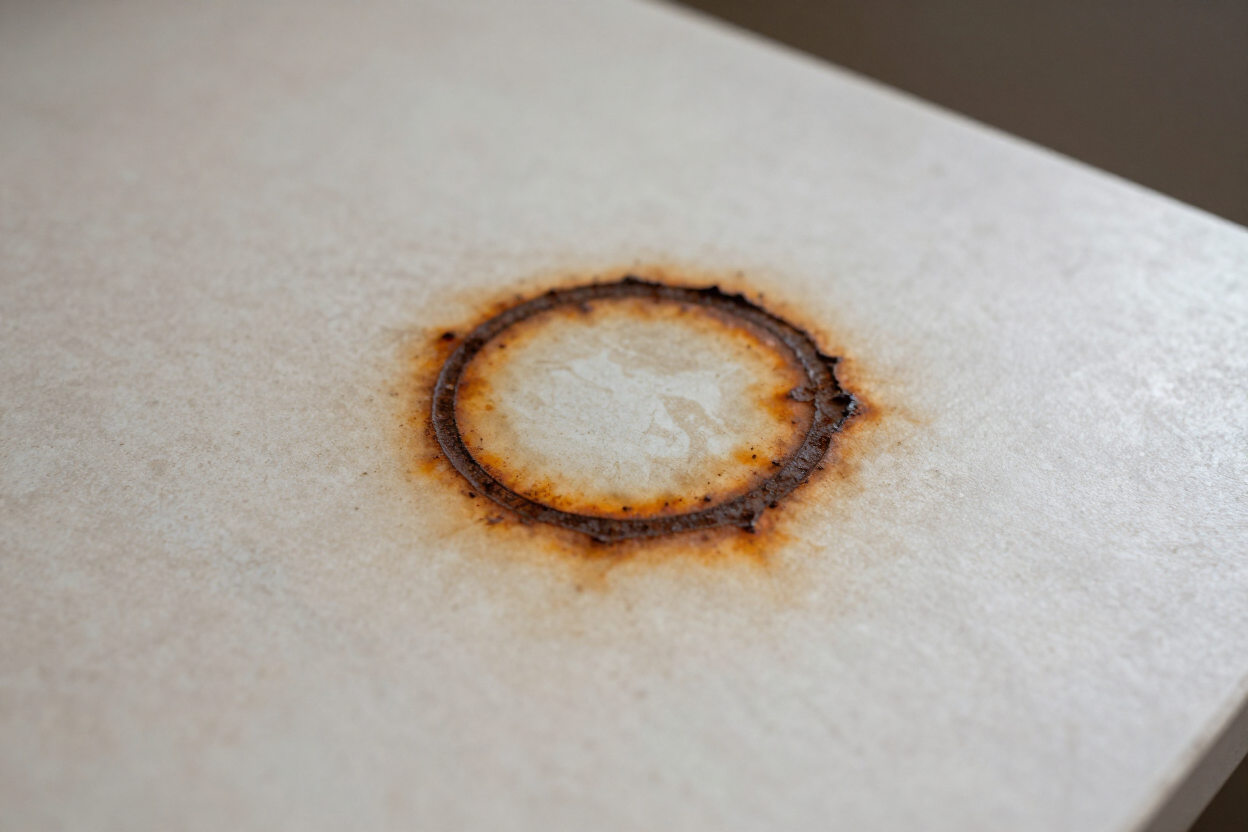
Rust
Orange or brown, usually under a can, a cast-iron pan, or a bathroom fixture. Sometimes it's iron in the stone itself.
Rust is the one stain where the store product will hurt you. Ordinary rust removers are acid. On marble they etch on contact. On granite they can damage the finish. Rust that came from the inside of the stone can't be drawn out at all.
● Pro only
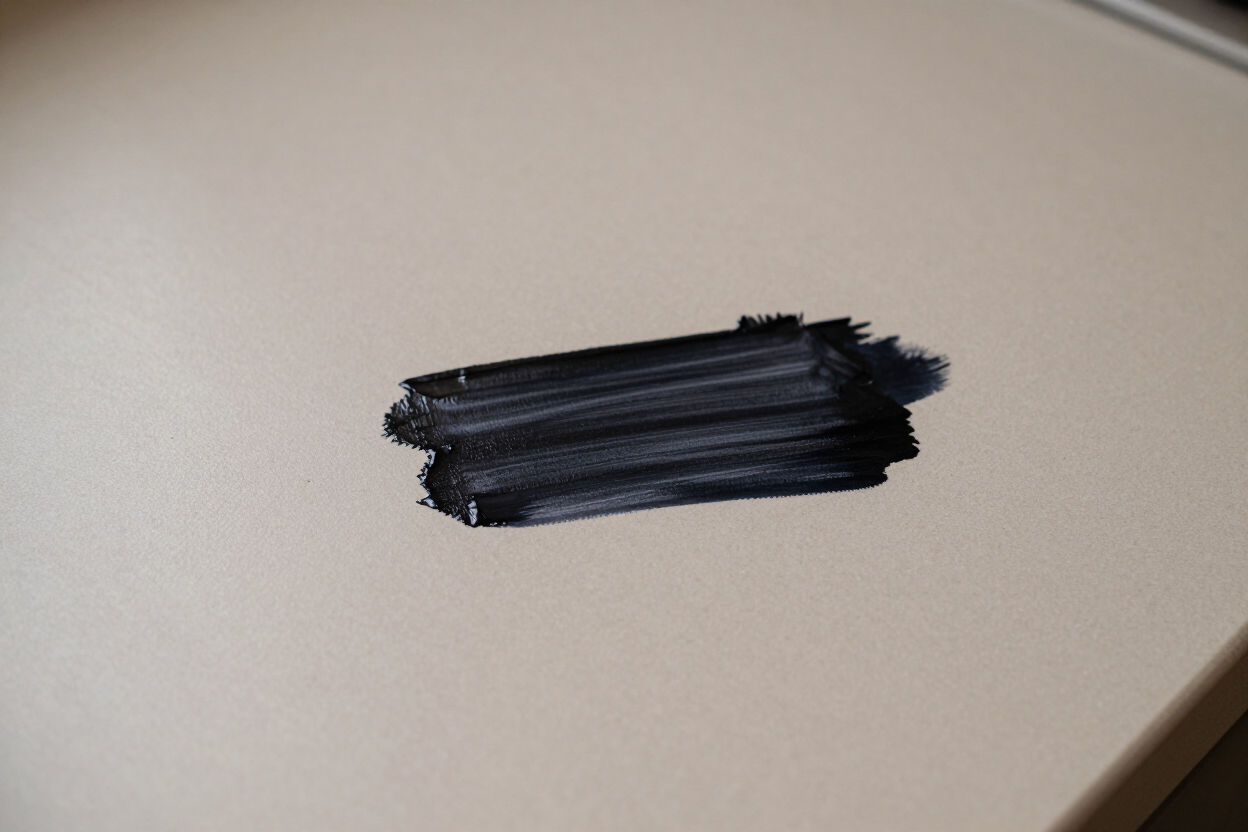
Ink, marker, dye
Pen, permanent marker, hair dye, kids' art supplies. Sharp-edged color.
Small spots often blot out if you get them fast. Once they've set, they're in the stone, and the solvent that draws them out depends on the stone and its color.
● Homeowner: blot immediately if it's fresh
● Pro: anything that's set
Did you know? Bleach doesn't remove a stain from stone. It changes the color of the stone around it, so the stain looks lighter and the patch looks worse.
Did you know? Etches don't spread on their own. Living with one is a fair choice. What changes over time is the fix: one ring is a spot job, a top covered in them is the whole surface.
What have you already tried?
This matters more than the stain.
- Nothing yet. Good. Blot, don't wipe, and don't reach for anything under the sink.
- Dish soap or a stone cleaner. Fine. If the stain's still there, it's in the stone, not on it.
- Bleach, vinegar, lemon, a "magic" eraser, a scrub pad, or a rust remover. If this is marble, you now have a stain and an etch in the same spot. If this is granite, the finish around the stain may be dulled. Stop here and send a photo. Anything else you try compounds it.
- A poultice kit or a "stain remover" from the store. Some of these are fine and some are acid or bleach with a stone label on the box. If it didn't work, stop. If it changed the color of the stone around the stain, stop and send a photo.
Did you know? The stain isn't the expensive part. What people do to it before they call is. Most of the stains we can't fully lift were scrubbed, bleached, or acid-cleaned first.
What about quartz?
Engineered quartz doesn't absorb, so most "stains" on it are sitting on the surface and come off with a mild cleaner and some patience. What doesn't come off is usually a mark in the resin itself, from heat, a harsh chemical, or a dye that bonded. Some of that polishes out. Some is permanent. Send a photo and we'll tell you which before anyone touches it.
What we do with a stain you can't lift
Identify the stone and the stain, pull it with the right chemistry for that combination, and if the acid or scrubbing already got to the finish, re-hone and re-polish that area so it matches the rest of the top. Then reseal that area, because the extraction takes some of the sealer with it.
Send a photo. See it gone.
Your own counter, with the stain out, back in your inbox. Plus what it is and what we'd do. No visit, no pressure.